
"Consumers select electric fencing because it's cost-effective, easy to maintain and takes less than half the time to build compared to traditional fence systems," says Merle Mohr, retired Gallagher North America Territory Manager, "And because of the low physical contact, electric fences are far more durable and last longer."
Less cost
Electric fences cost less than 50 percent of conventional non-electric fences, Merle explains. "That translates to roughly $1,000 per mile less than traditional fence. The cost savings can also increase to about 65 percent if you aren't picky about how 'pretty' the fence looks from the side of the road."
Less maintenance
Also electric fence is a mental barrier for the animal, not a physical one, reminds Mohr. "The animal receives a short, sharp but safe shock that is memorable enough that the animal never forgets. "So after the initial expense of constructing an electric fence is out of the way, there is less maintenance to oversee. "Of course there is some maintenance, but it is far less than traditional fence. Once an animal is properly trained, it will learn to avoid an electrified fence, which means your fence will last longer and remain in good condition," Mohr explains.
Works great in any application
High tensile fence will work well on any property, in any setting and for any application, says Mohr. "Any place you can use barbed wire, you can use high tensile fencing. It's twice as good as traditional fence and is a better value for your dollar. Plain and simple, it's just the way to go."
When calves kept getting onto the road, the Ryan family thought they’d have to replace kilometres of fencing, instead they found the solution with a heavy-duty, portable solar-powered fence Energizer – and without replacing a single wire.
The Fencing Dilemma
The Ryans run around 100 breeding cows, plus followers, on 162 hectares (400 acres) at Casino in the NSW Northern Rivers region, aiming at the beef vealer-weaner market.
Tim Ryan works off-farm in Brisbane, while his parents handle the day-to-day management of 'Glemmalo'.
“Dad’s 82, so we need gear that’s reliable and strong; we don't have time for stuff that doesn't work.
“We have some Charolais bulls and some Santa bulls; the breeds are quite mixed, so I call them ‘liquorice allsorts’.
“We had mains-powered electric fencing for a long time, but all our fences are getting really old. The previous Energizer sat in the shed near where the road dissects the property into three paddocks, with the one unit feeding through all the paddocks. Earlier this year we just weren’t getting any power at all; no kick. I’d say it was because of the rusted wire.
“The first ones to work it out were the calves. So because the electric fence wasn’t working, calves were getting out into our neighbour’s place: you’d see them skipping around the paddock then they’d just walk straight back through. They were also getting out on the road. It’s not a bitumen highway, but we’ve got a dirt road that runs through our place and people come and go all the time and I was worried someone would clean them up. So we needed to get the fence sorted.
“Dad was getting pretty annoyed because he couldn’t see where the shorts were. He was thinking to put in new fencing, where I thought we should maybe just replace the wire. However, in the last couple of years we’ve put some solar pumps in for water and I thought that technology was working well.
“Some people have said that solar seems expensive. My attitude is I don’t live there: I live and work in Brisbane, so I can’t be stuffing around with gear you’ve got to be fixing all the time. So I said solar is the go.”
The Solution - S400 Energizer
Tim said from there, his dad did some research.
“He was telling me about it, then showed me some brochures that he got from a rural retailer about an S400 Portable Solar Fence Energizer – Gallagher’s big, new solar one. We've never had Gallagher before on Glemmalo. Dad just said I think these Gallagher ones are the better.
“Our idea is to put a solar unit in each paddock, with each paddock running separately so if something goes wrong, the whole system doesn’t fail. We were going to try a unit, but Dad liked these S400s so much that he bought two of them at once.
“The fence on the front lane was the worst: that’s where these ‘little’ 300-kilogram calves were getting through. I really thought we might have to replace the wire, but then thought no, bugger it, let’s re-strain the wires, put the Energizer in and see how we go. Time is the most precious thing for me, so if I didn’t need to replace the wires, I didn’t want to have spent that time.”
The Ryans have two live offset wires on the inside of a four-wire fence.
“The first thing I liked was with these new S400 units is the recess in the unit to just slide the star picket up. It locks in on the crevices there; that’s great. Everything is built in, it doesn’t have a separate battery; the battery is in the unit so it’s all very portable and contained.
“Secondly what I liked is that it didn’t take long to set up. You hook up the battery and charge it up. Dad was looking around for something to hook the unit up to the fence, but everything you need to connect the unit to the fence comes with it. That’s really good.
“We blocked the unit off so the curious little buggers don’t eat the wires, put a star picket in, put the Energizer on, got it all connected and turned it on. That was it; we didn’t replace any wires. Then we tested the fence – fantastic! We were getting 5,000 volts out of it.
“In the last 10 years when we’ve had problems with the fence we could get it up and running but would only average about 1,500 volts, which isn’t a lot. When we put this S400 solar unit up, we’d finished about five in the afternoon, so the sun was going down. We hooked the battery up but I didn’t know if it would be charged enough, because obviously it charges off solar. So to instantly get 5,000 volts was great.”
With livestock trained to electric fencing again, Tim says it’s also improved cattle behavior in the yards, making vaccinating and drafting, for example, much easier with calves respecting all fencing.
“We’re working on having an S400 solar unit to run each paddock. I don’t have time to be stuffing around with this stuff, digging, connecting through gateways – not interested.
“I hadn’t used this technology before, but it’s great. I like it.”
Gallagher electric fencing solutions are enabling the students of Winnaleah District School to develop skills in environmental science, technology, engineering, mathematics (STEM), literacy and project management. The teachers at the K-12 school, located in northeast Tasmania, have been able to develop innovative teaching and learning environments.
The STEM, literacy and project management subjects are integrated into Food and Fibre Production, a key specialist subject taught at the school at every year level from kindergarten to year 10. Winnaleah is within a landscape of rolling hills and farmland, and many families involved with the school come from dairy and crop farming properties in the area.
When Gallagher Australia provided funding through its 2019 Gallagher Landcare Fencing Grants to support community-led electric fencing projects, Winnaleah school was one of those chosen for a grant. The Winnaleah school has a strong community partnership with local farmers, Landcare and other groups.
It’s also important to the community that the school offers students opportunities to learn about modern farming practices, so they can become part of the local skilled workforce; and at Winnaleah District School those skills now include learning about the wireless technology which is available to operate fencing, gates and irrigation.
Community support adds value
The Winnaleah District School farm, on 40 acres, has traditionally been stocked with just a few beef cattle, but the community recognised that with some infrastructure investment, there were opportunities to increase the stocking rate, involve the students in learning livestock management and husbandry skills, and learn how to grow pasture and crops. At the same time, there were environmental values on the farm that needed to be protected and enhanced.
The contribution of electric fencing product by Gallagher Australia was met in-kind by the community, with farmers and fencing contractors bringing their equipment and tools along to working bees, along with their labour. One of those fencing contractors was Gallagher’s own Territory Manager for Tasmania, Justin Cooper.
“The Winnaleah school is quite unique and services a large rural area,” Justin says. “A lot of the farm fencing was old and falling down.”
Local farmers brought their tractors to help pull down the old fencing and prepare the fenceline and gave their time to help erect the new fences.
With the Gallagher funding, the farm now has five-wire electric fencing, with three hot-wires, an earth and one plain wire, supported by Insulated Line Posts and Electric Fence Droppers. The Electric Fence Droppers extend post spacing, so less posts are needed to maintain tension in the fence.
The fence is supported by traditional end-assemblies, built by Justin, with help from students.
“We put in one kilometre of fencing, an i Series Energizer, and a WiFi Gateway,” he says.
The i Series Energizer is connected to the WiFi Gateway and then synched to the Ag Devices App, which sends fence performance information straight to the phone of the user.
WiFi compatibility enables the Energizer to use artificial intelligence algorithms to identify changes in fence performance and users can then remotely turn the unit on and off using the Gallagher Ag Devices App. This enables sections of the fence to be isolated for maintenance and then remotely switched back on.
Four Fence Monitors have been installed and allow the farm to be zoned, helping students, teachers and the farm manager to streamline animal movement and management.
The entire fence infrastructure is also ensuring students are learning how to use modern technology in agriculture.
Fencing to build a better farm
Using Gallagher electric fencing solutions has enabled the farm to be set up for easy livestock control, enhancing student and animal safety and welfare.
Taking down the old fence and installing new permanent electric fencing was also an opportunity to reconfigure paddocks for rotational and strip grazing systems that enable students to develop pasture management skills. A laneway was also installed, improving access and safety throughout the farm. Leading to the stockyards, it also encourages quiet livestock handling.
“The new fencing allowed us to create a laneway from one end of the farm to the other, which enabled us to make it much easier to manage and move livestock,” says Keeley Lester, Food and Fibre Production Leader, Winnaleah District School.
“We wanted to supply our kids with opportunities to learn technology and other skills through the farm.
“In our application for funding, we stated we wanted to design the school farm fencing to replicate the terrain of dairy and cropping farms around us.
“We wanted to focus on the latest technology, with WiFi Gateways. Part of the planning with students focussed on discussing why we would fence the farm the way we have and looking at other farms for design ideas.”
The Gallagher electric fencing products have also provided the farm with the ability to install permanent irrigation, to improve pasture production. A two-stage improvement has seen a pipe and riser installed in every paddock and popup sprinklers on the school oval, utilising an irrigation license from the nearby Cascade Dam.
“We can isolate paddocks, so we can improve pasture and grow crops. The students have grown potatoes every year, and harvested hay,” Keeley says.
“They’ve been able to sell the potatoes and keep some for cooking classes. Last year, some of the students held a ‘Potato Off’, where groups produced the best baked potato.
An integrated learning environment
With the pandemic cutting off options for excursions during 2020 and 2021, the school farm has been an even more valuable resource for learning and participation.
“We fenced a wetland area, to build it up as a natural learning environment,” Keeley says.
“Now anyone can take their class down and explore the wetland and move through the entire area safely.”
Plans for the wetland include specific plantings of habitat and other vegetation to protect and encourage birds, amphibious animals and insect life to inhabit the area.
Community support includes partnerships with Landcare, local Parks officers, BushKinder and local Aboriginal Elders, helping to improve the space and manage it.
“We’ve been able to use the wetland as an environmental teaching open classroom,” Keeley says. “We have participated in tree planting and integrated eco-studies into food and fibre teaching and learning activities.
“We’re integrating learning about First Nations bushfood products. The school has students of Aboriginal and Torres Strait Islander background and we all want to incorporate cultural learning within the space.”
The farm business is now able to diversify into steers, cows with calves and sheep, and develop pasture trials and ecostudies. Future plans include building a shearing shed and installing a chicken run with a caravan.
“Spending time on the farm, the students develop science, maths and project management skills – vaccinating animals, packaging potatoes for sale – and writing about their activities,” Keeley says.
“As our school farm is fully self-funded, everything sold has to go back into maintaining the farm. Fencing had been a priority for some time.
“With Gallagher donating the product, this meant our money could go towards constructing the fence. Contractors and the community donated skills and time to erect the fence. We were able to use the funds we had available to pay for such things as gates and the wood and wire to build end assemblies.”
When Allan and Michelle Gillbanks moved to their lifestyle property in Cambridge, NZ, they needed a way to keep their two miniature schnauzers safely contained. “They can be little escape artists, so we needed a foolproof solution to keep Gypsy and Bentley on our property and other dogs out,” says Allan. The couple had investigated pet proof fencing options for around their home and fencing off a separate area inside the house boundary for their canine companions. But they were quoted thousands of dollars.
A random social media post prompted the Gillbanks to look into one of Gallagher’s electric fencing solutions for cats and dogs. “My wife Michelle saw a Facebook post from a Gallagher employee who was using the fencing system for his dogs and we thought, that’s exactly what we need,” says Allan. Their lifestyle property was already fenced, with standard seven wire fences around the home. It even came complete with insulators, so it was ready to be powered up. The only thing the Gillbanks needed to do was fence a five-metre strip to split the yard in half and create a contained space for Gypsy and Bentley.
“Using a basic wire, a few Waratah Standards and Gallagher’s S6 Lithium Solar Fence Energizer for power, Gypsy and Bentley were safely contained within 25 minutes,” says Allan. Within a few minutes of powering up the fence, Gypsy and Bentley realised there were “ghosts in the garden” and did not go near the white electric fence wires.
Allan wishes they had found the Gallagher fencing solution sooner. The couple had previously spent a small fortune on an outdoor crate for their pets. Allan says they were difficult to put together and eventually got destroyed in a storm. “The Gallagher system was so easy to install and really is value for money.” The S6 Lithium is solar powered, which means Allan can set it and forget it.
“We don’t need to change or charge batteries and we know it will be powered 24/7. There’s nothing we need to do to manage it. It’s so easy to use, anyone can do it. “You just push a button to turn it on and push a button to turn it off. If I’m mowing around the house, I just turn it off, move the Waratah fence, mow the lawn and turn it on again.”
Allan says many lifestyle block owners with dogs think electric fencing is expensive and just for large scale farmers. But the Gillbanks’ experience shows that, with the right products for the job, it can be versatile and cost effective.
For South Canterbury dairy graziers Nigel and Gina Gardner spending hours moving break fences every day is a thing of the past thanks to Gallagher’s virtual fencing solution, eShepherd™.
The couple operates an intensive grazing operation across 350 hectares, running up to 800 dairy heifers, raising 150 jersey bulls for breeding and maintaining a small herd of 90 beef steers.
Efficient pasture management is at the heart of their operation. They need to effectively manage pasture residuals to keep their grass growing year-round and optimise their grazing to get the best animal growth rates possible for their clients.
“We have more fences than the average grazier because we run our dairy grazers in smaller mobs so we can focus on getting great growth rates for our clients,” says Gina.
“I used to be a dairy farmer, so I know where heifer weights need to be and I don't want to be sending anything back that I'm not happy with,” says Nigel.
However, their approach saw Nigel moving up to 20 break fences a day, so they started searching for a better way. They discovered eShepherd, which they started using on 150 grazing heifers in October 2023.
eShepherd trains cattle to remain within a virtual fencing barrier, which Nigel has set up on his laptop ready to activates from an app on his phone. It allows him to move and contain the livestock anywhere on the farm. The system also provides 24/7 insights and data on animal health and performance.
“It was amazing to see how easily and quickly the cows adapted. The biggest job was actually unpacking all the neckbands, activating each one and getting them turned on. As far as putting them on the animals and getting the virtual fencing working, within half a day, the heifers knew what was going on,” says Nigel.
Pasture is the backbone of the Gardner’s business. While they have had some good seasons recently, Nigel says the seasons are changing and becoming drier, which will present challenges for them.
“How we manage our pasture is key,” says Nigel. “I can't have mobs free-ranging and burning up pasture because then I end up needing a lot more supplement, which can be costly. Home-grown pasture is the most efficient feed, so we need to be smart about how we use it.”
The couple says Gallagher has been with them every step of the way on their eShepherd journey with after-sales advice and support. Nigel and Gina believe eShepherd has transformed part of their operation and given them better work-life balance.
“I'm not out there winding up electric fences or moving electric fences every day,” says Nigel. “In the eShepherd app, I remove, add and create breaks several days in advance and activate them daily or as necessary at the touch of a button. It’s that easy.”
Nigel and Gina wanted to put the system to the test, so Nigel programmed the breaks before they left for a long weekend. Rather than ask his farm manager to shift the mobs he activated the fence movements himself from their holiday location.
“It worked perfectly. I checked with my farm manager and the mobs had moved onto the new breaks no issues at all,” says Nigel.
He says eShepherd has made grass management so much easier.
“Using eShepherd means I can move mobs at any time of the day or night depending on the feed that’s available,” says Nigel.
“While I’m having breakfast, I use my phone to move the two mobs that have eShepherd neckbands. When I'm out moving those that are behind a traditional electric fence, I quickly check on my eShepherd mobs to make sure they have moved themselves and they're happy. Over time as we get used to using the new technology, I won’t feel the need to do that anymore.”
Gina says eShepherd is saving them time and freeing up brain space to be able to oversee their business in a different way.
“We have been away a couple of times since introducing eShepherd and Nigel's been able to see what's happening on farm, even though he's not here. It gives us real peace of mind,” says Gina.
The Gardners can see the potential to share data from eShepherd with heifer owners to reassure them about their animals’ progress while they are off farm for grazing.
After seeing the benefits of eShepherd over the last five months, Nigel and Gina now plan to expand the use of the virtual fencing solution across their operation, as investment allows.
“We’ve had so much positive feedback from our business partners, clients, and the farming community about the results we’re getting with eShepherd,” says Gina. “There is so much potential for technology to enhance the efficiency and sustainability of our farm we would be silly not to consider rolling it out further.”
In the aftermath of devastating wildfires, ranchers face significant challenges in restoring their land and managing livestock effectively. Wildfires often destroy not only vegetation but also miles of traditional fencing, leaving landowners scrambling for solutions to protect recovering areas while maintaining grazing efficiency. Virtual fencing technology, such as eShepherd, has become a revolutionary tool for ranchers navigating these difficult circumstances.
Virtual fencing offers numerous advantages to ranchers as they rebuild after a wildfire:
- Protects Vulnerable Areas: Virtual fencing helps keep livestock out of damaged or regenerating areas, allowing vegetation to recover naturally.
- Reduces Costs: With no need to rebuild or repair physical fences, ranchers save both time and money during the recovery process.
- Supports Erosion Control: By preventing grazing in fire-affected areas, virtual fencing protects fragile soil from erosion.
- Enables Dynamic Management: Ranchers can adjust grazing boundaries as vegetation regrows, making it easier to adapt to changing conditions.
- Promotes Sustainability: Virtual fencing prevents overgrazing, supports biodiversity, and contributes to long-term land health.
- Streamlines Operations: By replacing physical fences with easily adjustable digital boundaries, livestock management becomes more efficient.
- Improves Disaster Resilience: Virtual fencing provides ranchers with a flexible and future-ready tool to cope with the increasing risks of wildfires.
- Enhances Livestock Health: Animals graze in safer, carefully managed zones, reducing stress and promoting well-being.
Environmental Recovery Through Technology
Wildfires leave the land vulnerable to erosion, invasive species, and the loss of vital soil nutrients. Virtual fencing allows ranchers to protect these fragile areas while they recover, encouraging the regrowth of native plants and stabilizing the soil. This contributes to water retention and helps restore the natural biodiversity of the land.
By leveraging this innovative technology, ranchers are not only protecting the environment but also ensuring the future viability of their operations. Virtual fencing allows for precise grazing management, giving ranchers greater control over the recovery process while maintaining their livestock's needs.
Adaptability for a Changing Climate
As wildfires grow in frequency and intensity due to climate change, ranchers need flexible, cost-effective tools to sustain their operations. eShepherd’s virtual fencing system offers a forward-thinking solution that aligns with the realities of modern agriculture. Its adaptability and ease of use make it an essential tool for rebuilding after wildfires and preparing for future challenges.
Shaping the Future of Ranching
The adoption of virtual fencing after wildfires marks a significant evolution in livestock management. Beyond aiding in disaster recovery, tools like eShepherd empower ranchers to operate more sustainably and efficiently. By embracing this technology, ranchers are rebuilding stronger and contributing to broader environmental resilience.
Virtual fencing is not just a recovery tool—it’s the cornerstone of modern ranching in an era of increasing environmental challenges.
Portable electric fencing is one of the simplest and most effective tools available to livestock producers looking to improve pasture utilisation, manage grazing pressure and respond quickly to seasonal conditions.
Whether you're strip grazing cattle, rotating sheep through smaller cells, protecting newly established pasture or creating temporary laneways, a portable electric fence allows you to put stock exactly where you want them, when you want them there.
Unlike permanent fencing, portable systems can be installed, moved and packed away in minutes. Lightweight components such as poly braid, poly wire and poly tape make the system easy for one person to handle, while Gallagher's portable fencing range delivers the reliable shock performance needed to keep livestock respectful of temporary boundaries.
The benefits are immediate:
- Create temporary grazing cells quickly and efficiently.
- Increase pasture utilisation through rotational grazing.
- Reduce overgrazing and protect recovering paddocks.
- Improve feed allocation during periods of variable growth.
- Establish temporary laneways for easier stock movement.
- Adapt rapidly to seasonal conditions and changing feed availability.
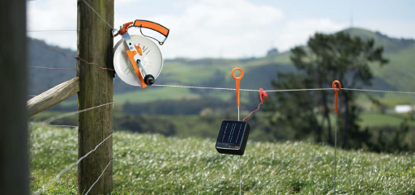
Set up a portable fence system with no fuss
Every portable fencing system starts with the same objective: delivering reliable power to a visible temporary boundary that stock respect.
The beauty of portable fencing is its flexibility. Whether you're managing 20 sheep, 200 cows or multiple grazing mobs across a large property, the system can be scaled to suit your operation.
The Essential Components
Lithium Solar Energiser
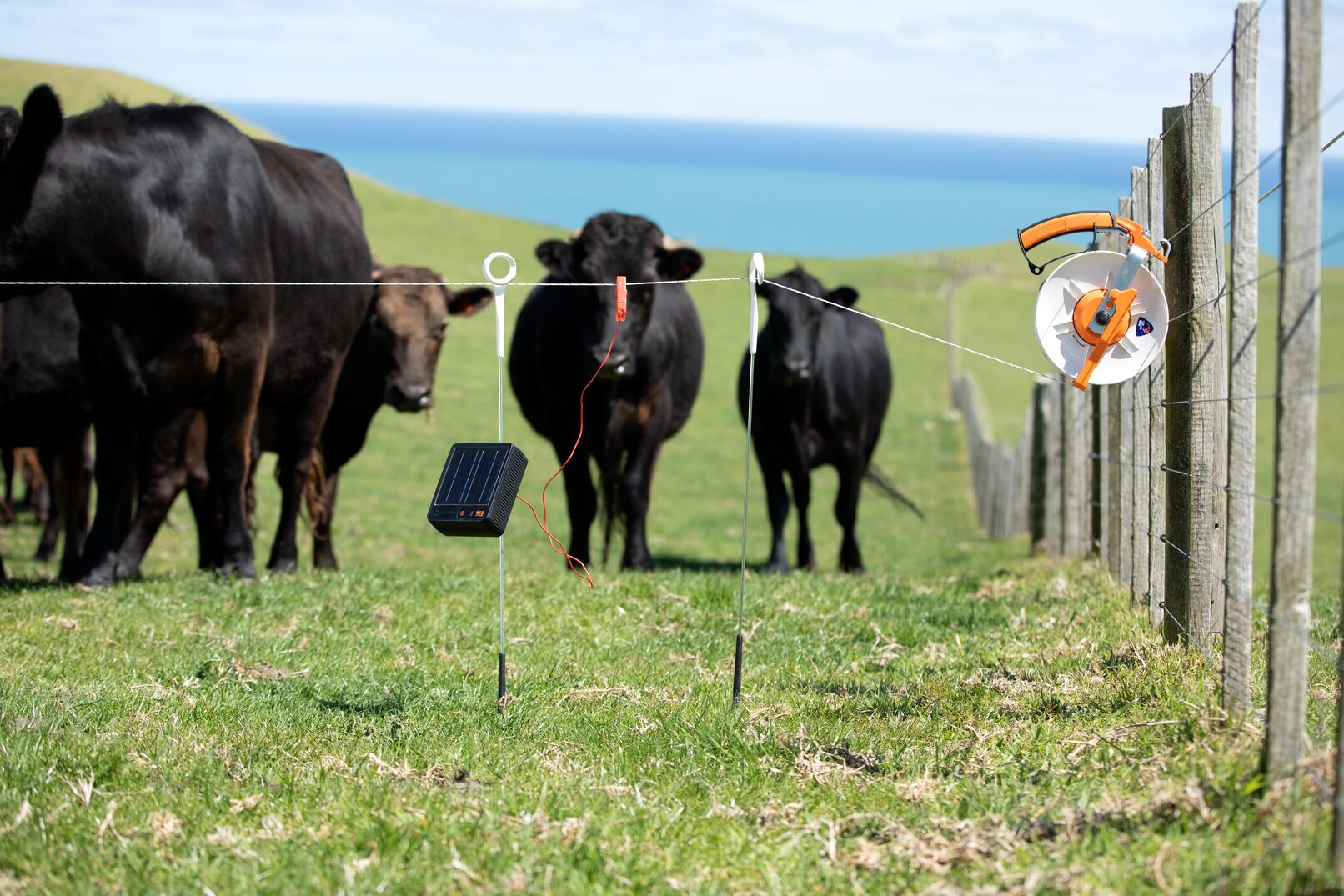
At the heart of every portable fence is the energiser. Gallagher's Lithium Solar range combines solar charging, lithium battery technology and portability in a compact unit that's easy to connect, transport and reposition as grazing areas move.
Tread-In Posts
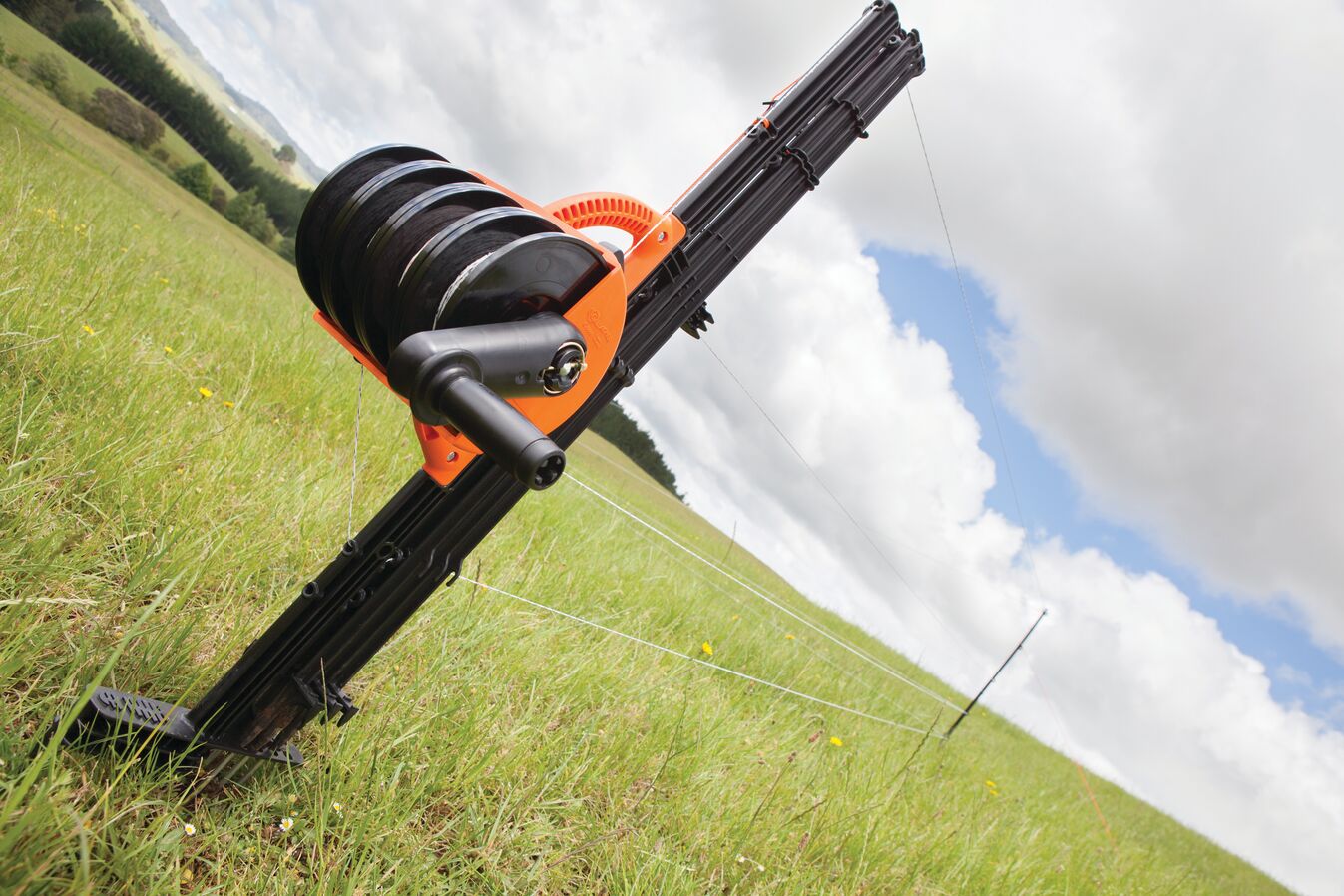
Lightweight and quick to install, tread-in posts make it easy to create break fences, temporary paddocks and grazing laneways without tools or heavy equipment.
Geared Reels
Reels allow you to deploy and retrieve braid, tape or wire quickly, reducing setup and pack-down time and making frequent fence moves practical.
Poly Braid or Poly Tape
Poly braid provides durability and excellent conductivity for repeated use. Poly tape offers superior visibility, making it ideal for training stock or highly visible boundaries.
Smart Fence Systems
For producers wanting maximum speed and simplicity, Gallagher Smart Fence systems combine posts, reels and conductors into a single integrated unit. Simply roll out the fence, connect the energiser and you're ready to control grazing.
For producers practicing intensive rotational grazing, Smart Fence systems make daily or weekly fence moves fast enough to become part of the normal routine, rather than another time-consuming job.
Power to the Fence: Choosing the Right Solar Energiser
The right energiser depends on the length of fence, stock type, pasture conditions and frequency of use.
know they can’t get past. A Mega Anchor is the basis of that fence as it can be fitted out with everything you need, from gates to electric fencing. Once in place, you’ll have a fence line animals will not cross.
| Model | Best Use |
| S20 Lithium Solar | Small paddocks, stock training and short grazing breaks |
| S30 Lithium Solar | Regular strip grazing and small-to-medium grazing cells |
| S60 Lithium Solar | Multi-wire sheep systems and higher stock pressure |
| S80 Lithium Solar | Longer fence runs, heavier pasture loads and tougher terrain |
| S120 Lithium Solar | Large-scale, remote or demanding off-grid grazing systems |
As a guide, heavier pasture growth and longer fence lengths generally require more output to maintain effective voltage .
Quick Tips for Sheep
Sheep can be highly responsive to portable electric fencing when systems are set up correctly.
- Use two or three fence wires where possible.
- Position a lower live wire for lambs and smaller sheep.
- Maintain good fence voltage and visibility.
- Move fences regularly to reinforce stock behaviour.
- Establish temporary laneways for easier stock movement.
- Use braid or tape that is highly visible and easy to handle.
Recommended starter setup: S20 or S30 Lithium Solar Energiser, tread-in posts, 2-3 strands of braid, geared reel, earth stake and lead set.
Quick Tips for Cattle
Cattle can often be managed effectively with a single hot wire, making temporary fencing one of the most efficient grazing tools available.
- Use one wire for trained adult cattle.
- Add a second wire for calves, weaners or higher stocking pressure.
- Use braid where fences are moved frequently.
- Consider tape where additional visibility is beneficial.
- Maintain consistent fence voltage for best results.
Recommended strip grazing setup: S30 or S60 Lithium Solar Energiser, 1-2 braid lines, tread-in posts, geared reel and gate handle.
Quick Tips for Mixed Livestock and Remote Grazing
Managing multiple livestock classes or larger grazing areas requires additional flexibility.
The most important consideration is maintaining reliable power throughout the system. Fence length, terrain, stock numbers and the combination of livestock being grazed all influence the ideal setup.
For mixed grazing enterprises, adjustable wire heights and highly visible conductors can improve stock control across multiple species. In larger or more remote paddocks, choosing a larger energiser and implementing good earthing practices will help maintain fence performance.
Recommended mixed grazing setup: S60 or S80 Lithium Solar Energiser, multiple reels, adjustable conductor heights and visibility tape.
Recommended remote grazing setup: S80 or S120 Lithium Solar Energiser, strong corner support, multiple reels, quality earthing and regular voltage monitoring.
Make Every Blade Count
As many producers move through spring into the early summer growing period, feed quality and pasture utilisation can change rapidly across the farm. Portable electric fencing provides the flexibility to respond just as quickly, allowing you to capture surplus feed, improve grazing efficiency and protect valuable pasture when conditions turn.
Whether you're tightening grazing rotations, setting up temporary breaks or managing stock through changing seasonal conditions, Gallagher's portable electric fencing range gives you the confidence to move fast, stay flexible and make every hectare work harder.
In the wide-open plains of South Dakota, a quiet revolution is taking place. At Jorgenson Landing Cattle, CEO Nick Jorgenson is leading the charge by implementing cutting-edge virtual fencing technology to tackle one of modern ranching’s biggest logistical challenges: managing large herds across vast expanses of land without exhausting manpower or infrastructure.
Spanning 13,000 acres and home to 1,500 Angus females, the ranch faced steep demands with traditional rotational grazing methods. Moving cattle with physical fencing was not only labor-intensive but also inefficient. That’s where the Gallagher eShepherd™ virtual fencing system entered the picture — offering a smart, scalable solution that’s already paying dividends.
A New Age of Grazing
By adopting virtual fencing, Jorgenson's team significantly cut down the need for permanent fencing and physical labor. The system uses GPS-enabled neckbands to set virtual boundaries, allowing cattle to be moved or contained using nothing but a mobile app. For Nick, the impact has been twofold: simplified herd management and healthier, more productive pastures.
“We’re mimicking what the bison did here centuries ago,” Nick explains. “This means longer rest periods for the grass, which rejuvenates the land and fosters a healthier ecosystem overall.”
This natural grazing rhythm is more than just eco-friendly; it's regenerative. The grasslands benefit from the rest, the soil recovers, and biodiversity begins to flourish — a rare balance of productivity and conservation in modern agriculture.
Real-Time Control and Peace of Mind
One of the biggest advantages of the Gallagher eShepherd system is the real-time monitoring it provides. With just a glance at his mobile device, Nick can check the location and status of every animal on the property — all without setting foot in the pasture.
This instant oversight allows the ranch team to proactively identify issues such as a stray cow or a malfunctioning collar. The result? Less stress, quicker response times, and greater peace of mind.
Technology That Works for the Rancher
Jorgenson notes that the setup process was surprisingly simple. The eShepherd collars come pre-assembled, minimizing technical hurdles and making it accessible even to those with limited tech experience. The system is intuitive, reliable, and integrates seamlessly into daily ranch operations.
What’s more, Nick has observed notable improvements in cattle behavior and welfare, particularly among calves. The virtual boundaries allow younger animals to graze in more nutrient-rich areas, leading to better growth and nutritional outcomes.
Eye on the Future
Encouraged by the system’s success, Nick plans to expand virtual fencing to the entire herd within five years. His enthusiastic endorsement could signal a broader shift in the industry as ranchers seek sustainable, efficient, and scalable management tools.
“Virtual fencing is more than a tech upgrade,” Nick says. “It’s a paradigm shift in how we think about land stewardship, animal care, and the future of ranching.”
A Model for Modern Ranching
Nick Jorgenson’s experience with the Gallagher eShepherd™ system is a compelling example of how innovation can be harnessed to solve age-old agricultural problems. His approach blends tradition with technology, respecting the land’s natural rhythms while pushing toward a smarter, more sustainable future.
From ecological regeneration to operational efficiency, the story unfolding at Jorgenson Landing Cattle is one of transformation — and it’s only just begun.
When farmers consider adopting a new technology, one of the first questions they (or their accountant or banker) often ask is: “What’s the return on investment?”
It’s a fair question. But when it comes to virtual fencing, it’s also, in many ways, the wrong question.
It’s hard to pin down a single ROI for virtual fencing because the benefits are far more dynamic, interconnected, and farmer-specific than traditional metrics can capture. And while that may seem like a hurdle to adoption, it’s actually a signal of just how powerful and transformative this technology can be.
The ROI Is Real: But It’s Not Always Where You Expect It
Virtual fencing is more than just a high-tech replacement for electric tape and fence posts. It’s a tool that enables a fundamental shift in the way livestock are managed—giving farmers the flexibility to move stock remotely, experiment with rotational or regenerative grazing, and respond in real time to what’s happening on the ground.
For many of our eShepherd farmers, the real value of virtual fencing emerged only after they started using it. In many cases, the return came not just in operational savings, but in unexpected benefits—like improved animal behaviour, better pasture utilisation, fewer injuries, and even improvements in mental wellbeing.
In short, the traditional ROI equation misses the point. This isn’t just about dollars saved; it’s about farming smarter.
A New Lens on Value
Imagine a system that not only saves hours of manual labour but also gives you visibility of your herd at all times, more control over pasture growth, and the freedom to manage grazing from your phone. Virtual fencing enables all of that. But how do you put a price on being able to spend more time with your family, feeling less stressed and more in control. Or on the value of a reduced carbon footprint? How do you quantify a herd that’s calmer, easier to handle, and gaining weight more consistently?
Farmers who have used virtual fencing often report these “soft” benefits as being the most transformative, yet they are the hardest to measure in a conventional ROI spreadsheet.
That’s why we encourage a different approach. Start with your biggest pain point. Whether it’s time, labour, land use, or stock performance, virtual fencing is a tool that can be adapted to help you solve it. Start small, test and learn, and build from there. The returns will follow—and they’ll likely surprise you.
Tech That Grows With You
Virtual fencing is increasingly being paired with tech such as smart weighing platforms, satellite pasture monitoring, and integrated data systems. These technologies work better together, delivering a more holistic view of farm performance and empowering farmers to act with precision.
But even here, the true value only becomes clear over time. Insights from real-time weight gain data might tell you when to move stock. Pasture data might reveal hidden potential in underutilised areas. And AI-driven tools are on the horizon to help interpret it all so farmers get actionable insights, not just more numbers.
Redefining the ROI Conversation
The challenge of defining ROI in advance is not a flaw—it’s a feature. It reflects the complex, interconnected nature of farming and the reality that every farm is different.
Instead of trying to calculate every dollar before making a decision, we invite farmers to think of virtual fencing as an opportunity to unlock new efficiencies, experiment with new ideas, and reclaim time and headspace to focus on what matters most.
And as we’ve seen with our customers across Australia, the US, and New Zealand, once farmers start using the technology, the value becomes unmistakable.
Let’s move the conversation beyond “What’s the ROI?” to “What’s possible?”
In the sandy soils of southwest Western Australia, just over two hours south of Perth, Kevin Nettleton and his sons Ewen and Campbell are transforming the way they manage their Limousin cattle stud. With 50 breeding cows and 13 yearling heifers, their operation is a blend of tradition and innovation—now powered by eShepherd virtual fencing technology.
From Struggle to Surplus
After years of battling poor pasture growth, Kevin made the shift to regenerative farming. “We’ve traditionally struggled for grass over the last three years,” Kevin explains. “Now, we have a surplus—which is unbelievable.”
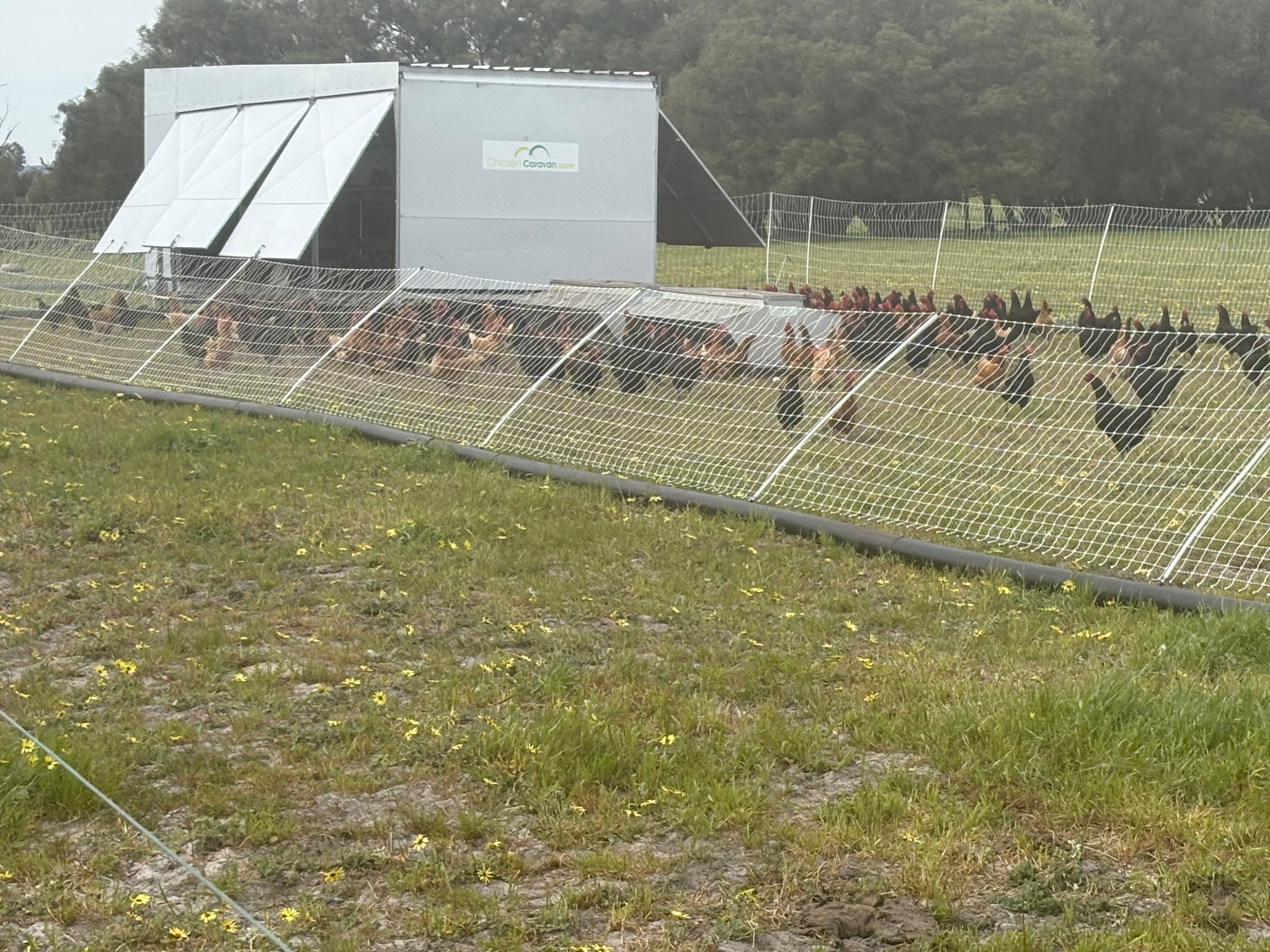
The change wasn’t just about grazing strategy. Youngest son Ewen introduced chickens into the rotation, moving them daily through the paddocks after the cattle. Their manure has supercharged pasture regrowth, with fresh feed reaching shin height within three weeks during the growing season.
Virtual Fencing: A Game Changer
The Nettleton family adopted eShepherd for their breeding cows. Upon initial fitting, reactions ranged from calm acceptance to brief bucking, but the animals quickly adapted. “There wasn’t any lengthy training,” Kevin says. “They just responded to the audio warnings. We haven’t had any cross the virtual fence.”
The system has allowed oldest son Campbell to manage grazing with precision. He uses virtual paddocks to rotate stock, protect wet areas, and funnel animals through laneways, all without lifting a single polywire. “It’s been a game changer for us,” Kevin says. “Our cows and calves have never done as well as they have since we’ve had eShepherd.”
Low-Stress Calving and Monitoring
Calving takes place from March to June, initially in physical paddocks under close supervision. Once calves are on the ground, the Nettleton’s transition the herd to virtual paddocks. The system lets them monitor cow behavior remotely—often from the comfort of home.
“You could be lying in bed, turn on the app, and see a cow off on her own,” Kevin says. “Most of the time, she’s calving or has just calved. It’s a very easy way to check without having to be there all the time.”
As calves grow, they begin grazing further from their mothers. Kevin recently spotted a group of 14 calves happily grazing 150 metres away, while their mothers rested nearby.
Smart Movement and Leadership in the Herd
Kevin’s cows are very relaxed and expert at responding to virtual paddock changes. “We just change the fences and they move accordingly,” he says. “We’ve got a cow called T16—she’s an ultimate leader. She knows when the fence has been shifted and brings the rest of the mob with her.”
Kevin and his sons are also using virtual laneways to guide cattle to yards for vet work or mustering. “Previously, you’d spend frustrating time on a quad trying to get them in,” he says. “Now, it’s easy. Once they’re used to it, they don’t go where they’re not supposed to.”
Reliable Tech, Even in Tough Conditions
Despite operating in a low-lying area with variable weather, Kevin hasn’t had issues with battery life or connectivity. “We’ve just been changed over to 5G. We get one bar and have no issues,” he says. Even in wet seasons, the system helps him exclude waterlogged areas and protect soil structure.
Looking Ahead
Kevin’s experience is a testament to how virtual fencing can support regenerative farming, improve animal welfare, and simplify day-to-day management. “It just makes management so much easier,” he says. “It’s fabulous.”
Why eShepherd Works for the Nettleton’s
- Precision grazing across mixed soil types and leased land
- Improved cow and calf condition through rotational grazing
- Seamless integration with regenerative practices, including poultry
- Reduced stress and labour during calving and mustering
For Kevin, eShepherd isn’t just a tool—it’s a transformational shift in how he manages his stud. His story shows what’s possible when smart technology meets thoughtful stewardship in Western Australia.